
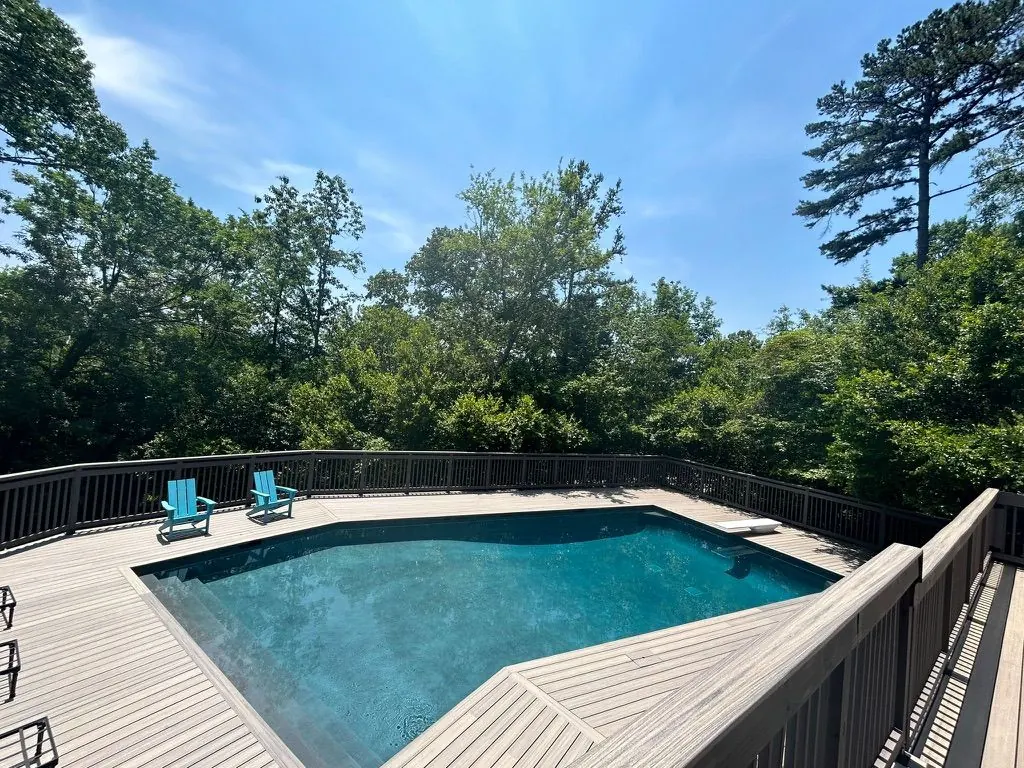
Wood vs Composite Decking: What Birmingham Homeowners Should Know in 2026
Every deck project starts with the same question: wood or composite? It is the single biggest decision you will make about your new outdoor space, and it usually comes down to a number.A pressure-treated wood deck typically runs somewhere between $20 and $40 per square foot installed, while composite decking generally lands between $35 and $65 per square foot. On a popular deck size like 16×20, that difference often adds up to roughly $5,000 to $10,000 more upfront for composite.That gap is real, and it is why so many Birmingham homeowners start with wood. But the sticker price is only part of the story. What you spend on maintenance over the next 15 years, how much weekends you lose to sealing and staining, and how the deck holds up in Alabama heat all change the math. Here is an honest look at both materials, so you can decide which one fits your budget, your property, and how you actually want to live.
The Quick Answer
Wood wins on upfront cost. A pressure-treated deck costs meaningfully less to build, which makes it the better pick when budget is the deciding factor. Composite wins on longevity and upkeep: it never needs sealing or staining, it resists rot and termites, and quality brands carry warranties of 25 years or more. If you plan to stay in your home and would rather spend your weekends on the deck instead of working on it, composite usually justifies its higher price overtime.
2026 Price Comparison at a Glance
Here is how the three most common deck materials compare, using national 2026 ranges for a professionally built deck. Real quotes in Central Alabama vary with deck height, railings, stairs, and site conditions. Composite adds one more wrinkle: within its range, the price moves with the color, texture, and technology of the board you pick, as we explain below.
Material |
Cost per Square Ft Installed |
16×20 Deck (320 sq ft) Estimate |
Typical Lifespan |
Maintenance |
| Pressure-treated wood | $20 to $40 | About $6,400 to $12,800 | 10 to 15 years for surface boards; frame can last 25+ with care | Clean and re-seal or re-stain every 2 to 3 years |
| Composite ( Trex, TimberTech, Fiberon ) | $35 to $65(varies by color, texture, and board technology) | About $11,200 to $20,800 | 25 to 35+ years | Wash a few times a year with soap and water |
| Premium PVC( TimberTechAdvanced, highest Trex lines) | $60 to $120 | About $19,200 to $35,200 | 35 to 50+ years | Same light washing; top-tier fade and stain warranties |
What drives the price of each material?
Pressure-treated wood keeps costs low because the material itself is affordable and widely available in the Southeast. The price rises quickly with add-ons: elevated decks, staircases, cable or composite railings, and skirts all add labor regardless of decking material.
Also, for composite decking , the structure needs to be re-inforced, he composite boards weight more and require 2 extra things:
1.- the floor joist need to be 12 in on center in most cases, so the boards don’t curl up or down.
2.- the joists need to be waterproof, (sealed/ taped) before installing the deck boards.
Composite boards cost more to manufacture, and you pay for that in the material line of the estimate. The exact price depends on the board you choose: color, texture, and technology all move the number. Simple, solid colors sit at the low end, while premium textures and boards engineered to stay cooler underfoot, a real consideration in full Alabama sun, sit at the top of the range. The trade is that the frame and the boards are designed to go decades without the sanding, sealing, and board replacement that wood eventually needs. Premium PVC sits at the top because it is entirely synthetic, holds color the longest, and stays cooler underfoot than most composites, which matters in full Alabama sun.
Do not make this mistake!
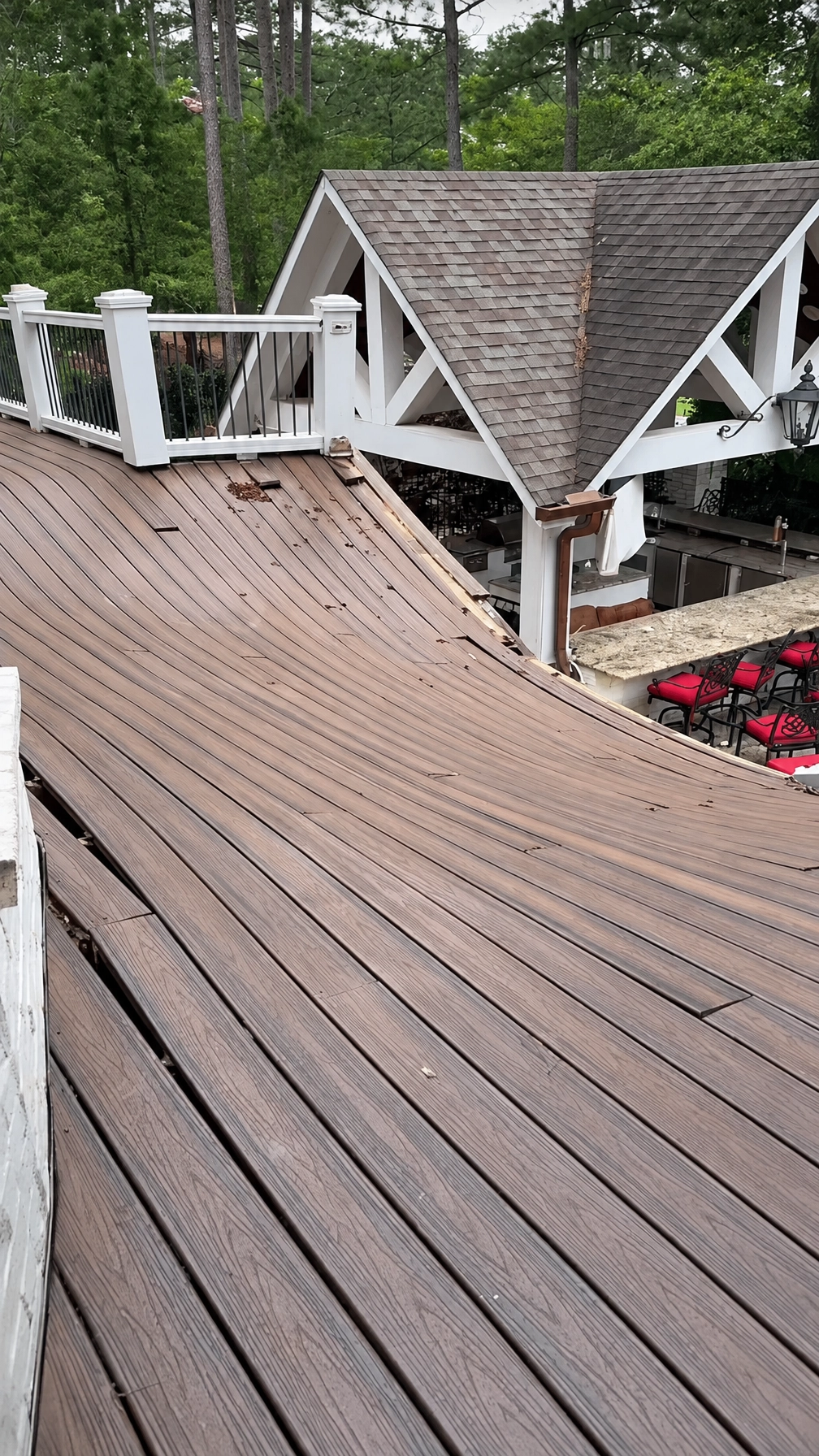
Often times we see decks that have a composite decking floor sagging or collapsing within years of being built, why is that?
Well, most of the time is usually human error, people remove the old pressure treated deck boards and install composite in the old structure, or even new pressure treated structure without seal-taping the floor joists, that causes the wood to suck way more moisture because the composite deck is plastic and the structure rots even faster than with a pressure treated decking floor, so, in this case it will be a waste of money, and materials. Please make sure the structure is strong enough before you install composite boards!
Wood Decking: Pros and Cons
Pros of wood
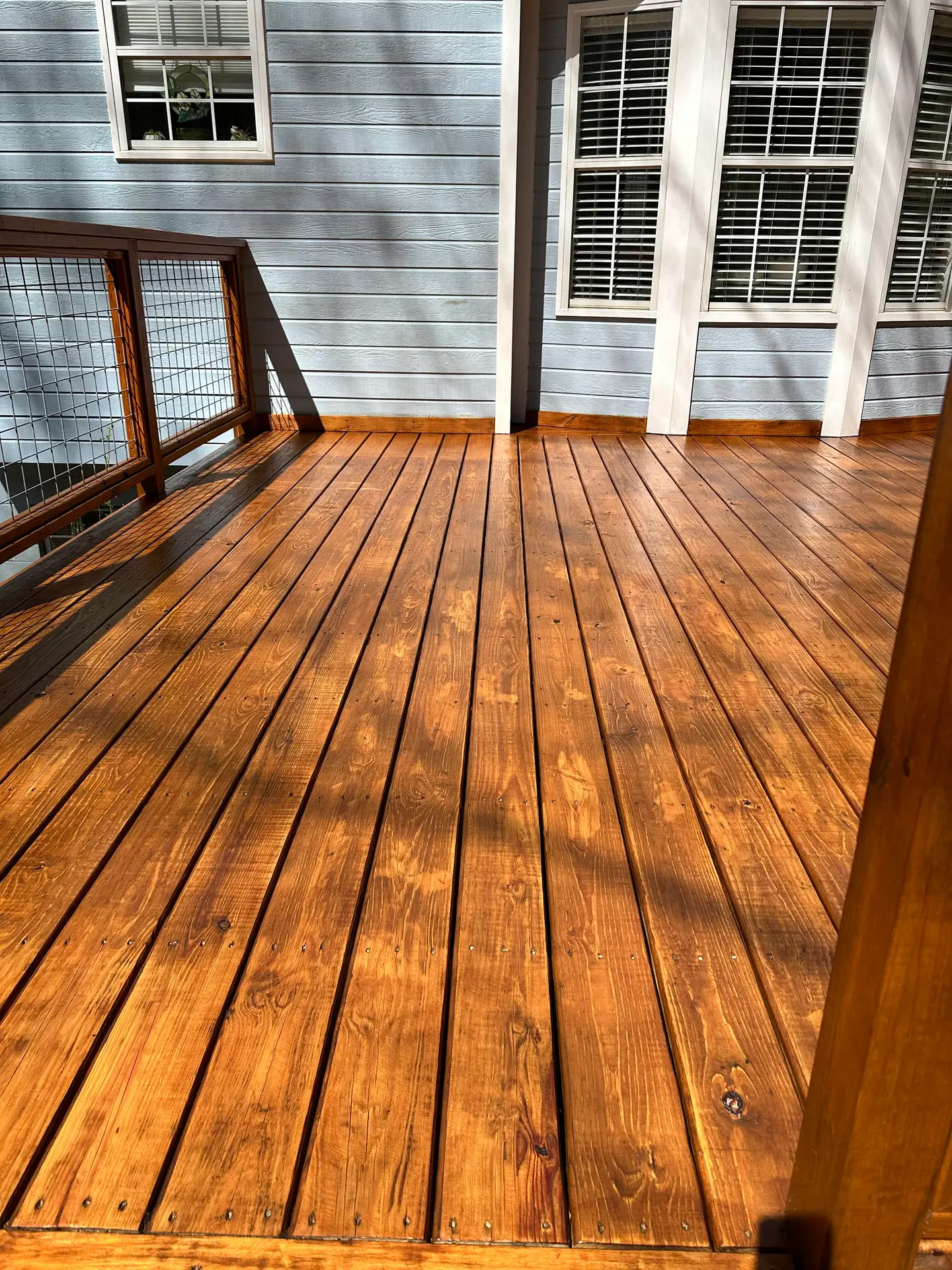
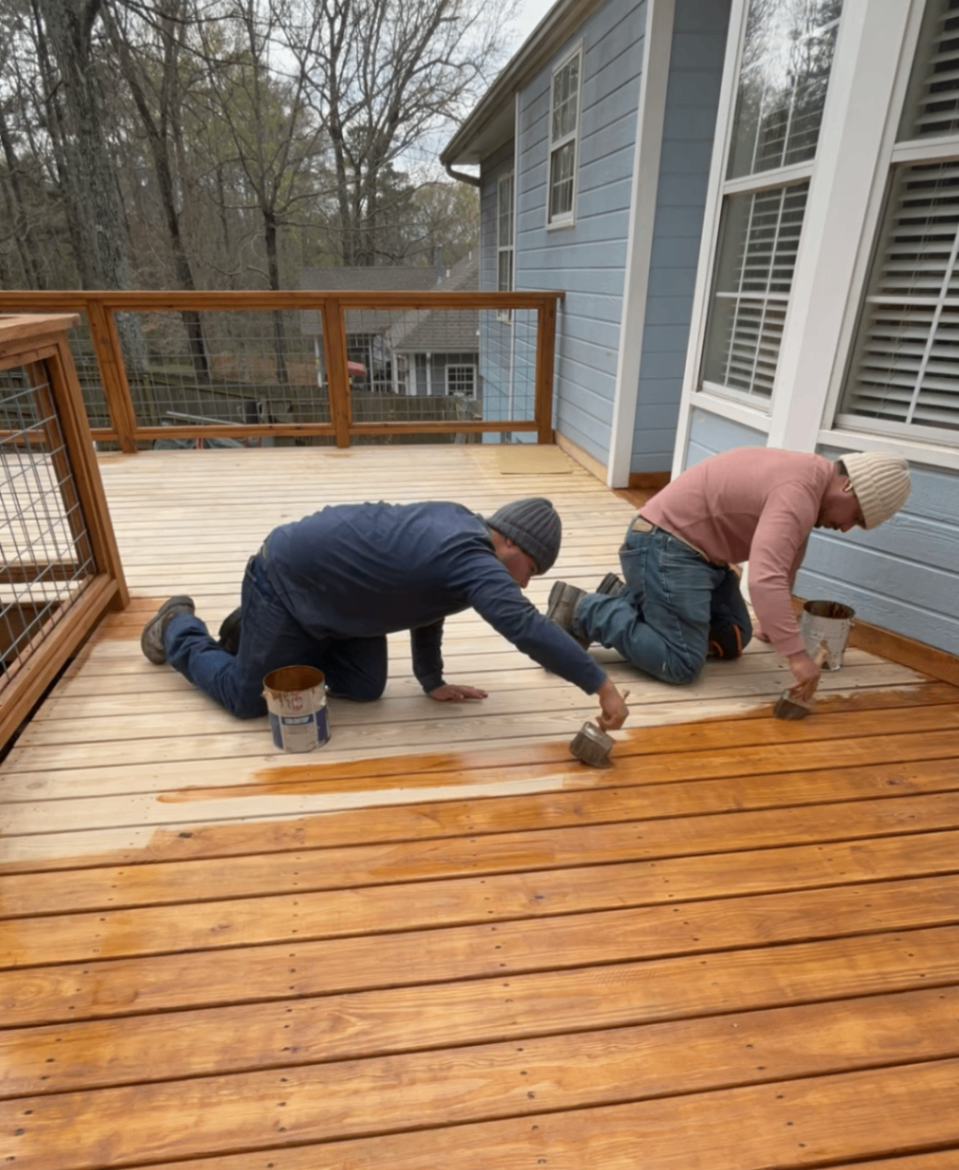
Lower upfront cost, typically $20 to $40 per square foot installed.Natural look and feel that many homeowners prefer, and real wood can be re-stained indifferent colors over the years.Easy for a skilled carpenter to modify, repair board by board, or expand later.Cooler underfoot in direct sun than dark composite boards.
Cons of wood
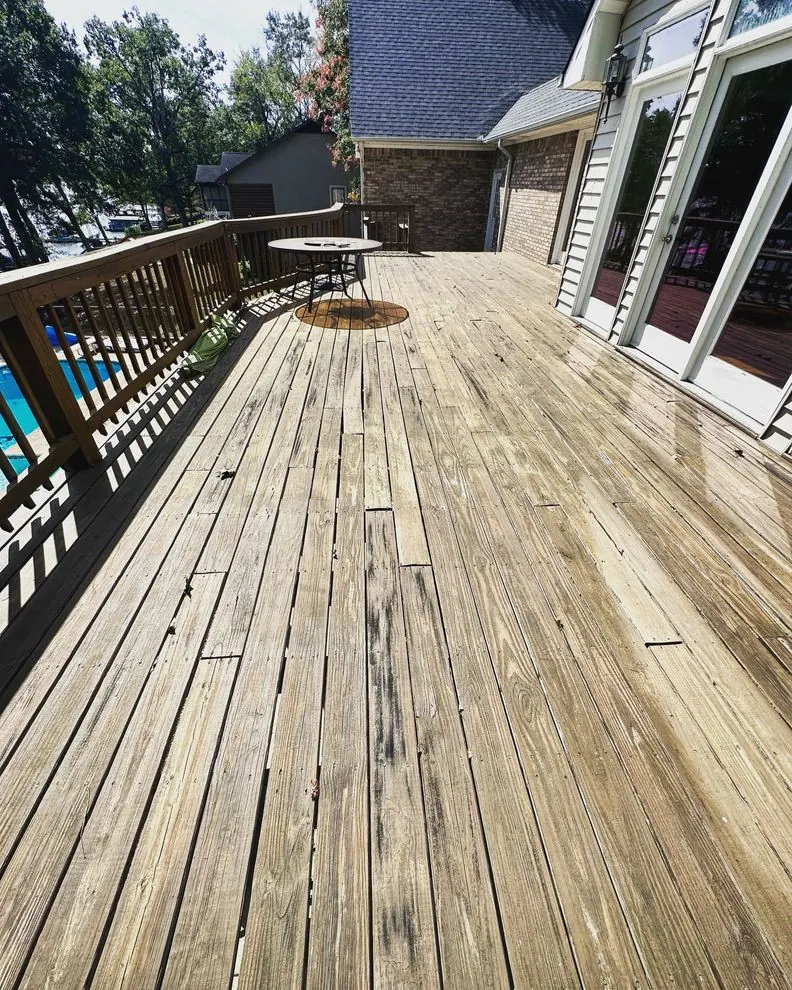
Demands regular upkeep: cleaning and resealing or re-staining every 2 to 3 years, or the surface deteriorates fast in our humid climate.Vulnerable to rot, warping, splinters, and termites, all common in Central Alabama.Surface boards often need replacement within 10 to 15 years, even when the frame is still sound.Weather cycles here, from humid summers to wet winters, shorten the life of a neglected wood deck.
Composite Decking: Pros and Cons
Pros of composite
No sealing, staining, or painting, ever. A wash with soap and water a few times a year is enough. Resists rot, splinters, and termites, a real advantage in our humid climate.Long warranties from major brands: Trex offers 25 to 50-year fade and stain coveragedepending on the line, and TimberTech offers up to 50 years on its premium PVC lines.
Holds value for buyers who want a low-maintenance yard, and consistent color for decades.
Cons of composite
Higher upfront cost, typically $35 to $65 per square foot installed.Dark composite boards can get hot in Alabama summer sun, sometimes reaching 145 to 160degrees, roughly 20 to 30 degrees hotter than lighter colors or wood. Boards built with heat-resistant technology run noticeably cooler, and lighter colors help too, so it is worthcomparing product lines before you fall in love with a color.Can scratch or fade at the surface on lower-grade lines, so brand and product tier matter.
Boards cannot be spot-restained like wood, and repairs usually mean replacing full boards.
Which One Is Right for You?
Most homeowners find their answer in one of four situations. See which one sounds like you.
You are budget-first.
If keeping the initial cost down matters most, pressure-treated wood is the straight forwardchoice. Just budget honestly for maintenance: plan on cleaning and sealing every couple of
years, and expect to replace surface boards at some point. A well-built wood deck that gets thatcare is a genuinely good investment.
You never want to maintain it.
If the words “reseal every two years”; made you sigh, composite is worth the premium. You willpay more today and then essentially stop thinking about the deck. Wash it a few times a year,and the boards handle the rest.
You are selling within five years.
If a move is on the horizon, wood often makes sense. Its lower cost is easier to recoup at sale,and nationally wood decks tend to recoup a slightly higher share of their cost than composite. Aclean, well-built deck in either material photographs well and helps a listing.
You want the premium look and you are staying put.
If this is your forever home and the deck is where you will spend your evenings, premiumcomposite or PVC delivers the richest finish, the longest warranties, and the lowest lifetime ofhassle. Lighter color lines also stay cooler underfoot, which matters on a sunny Alabamaafternoon.
Is Composite Decking Worth It?
The honest answer depends on how long you will own the deck. The premium for composite ona 16×20 deck is often in the $5,000 to $10,000 range. Now add up what wood costs over thesame stretch: professional cleaning and resealing or re-staining every 2 to 3 years commonlyruns a few hundred to around a thousand dollars each cycle, and at least one round of surfaceboard replacement may come due within 10 to 15 years. Over 15 years, a maintained wood deckcan easily absorb several thousand dollars in upkeep, plus a fair number of your weekends if youdo the work yourself.So for a homeowner staying 15 years or more, the composite premium is often largely offset byavoided maintenance, with the deck still in far better condition at the end. For a shortertimeline, the math usually favors wood. One caveat: these are typical national ranges, and everyproject is different. A side-by-side estimate for your actual yard, with line-item pricing, is theonly number that really matters.
Frequently Asked Questions
Is composite decking worth the extra cost?
Usually yes if you plan to stay in your home 10 or more years and value not doing maintenance.The upfront premium is often offset over time by the cost of repeatedly cleaning, sealing, andeventually replacing.
Does composite decking get too hot in Alabama?
In full summer sun, dark composite boards can get uncomfortably hot, with surfacetemperatures sometimes reaching 145 to 160 degrees. Lighter colors run noticeably cooler, andshaded or north-facing decks stay comfortable. Many brands also offer boards with heat-reducing technology that stay cooler underfoot, so it is worth asking about those if your deckgets full sun. Wood also heats up but generally stays a bit cooler than dark composite.
How long does a wood deck last in Alabama?
With consistent care, meaning cleaning and resealing or restaining every 2 to 3 years, apressure-treated wood deck commonly lasts 15 to 25 years in our climate, and the frame canoutlast that. Skip the maintenance, and the surface boards can deteriorate within 10 to 15years.
What deck material adds the most home value?
Both help. Wood decks often recoup a slightly higher percentage of their cost at sale becausethey cost less to build, while a well-kept composite deck is a strong selling point for buyers whowant a low-maintenance yard. Condition and build quality matter more than material eitherway.
Which is better for a pool deck?
 Composite or PVC is usually the better pool choice. It handles constant splashing and chlorinewithout sealing, will not splinter bare feet, and light-colored lines stay cooler on hot afternoons.Wood can work around a pool but needs vigilant sealing to survive the constant moisture.
Ready to Design Your Outdoor Living Space?
Bystone builds both wood and composite custom decks across Birmingham and CentralAlabama, including Hoover, Vestavia Hills, Trussville, Odenville, Chelsea, Gardendale, Fultondale,and the Logan Martin Lake area. We start with how you want to use the space, then design and build a deck around that, with a personalized, client-focused approach, transparent estimates, and clear communication from the first site visit through the final walkthrough.
If you are weighing wood against composite for your home, we are glad to walk your property, talk through the trade-offs, and give you straight numbers for both. Reach out for aconversation and a quote.
Get a private consultation today!
We want to feature your project next in our Project Gallery!